

Table of Contents
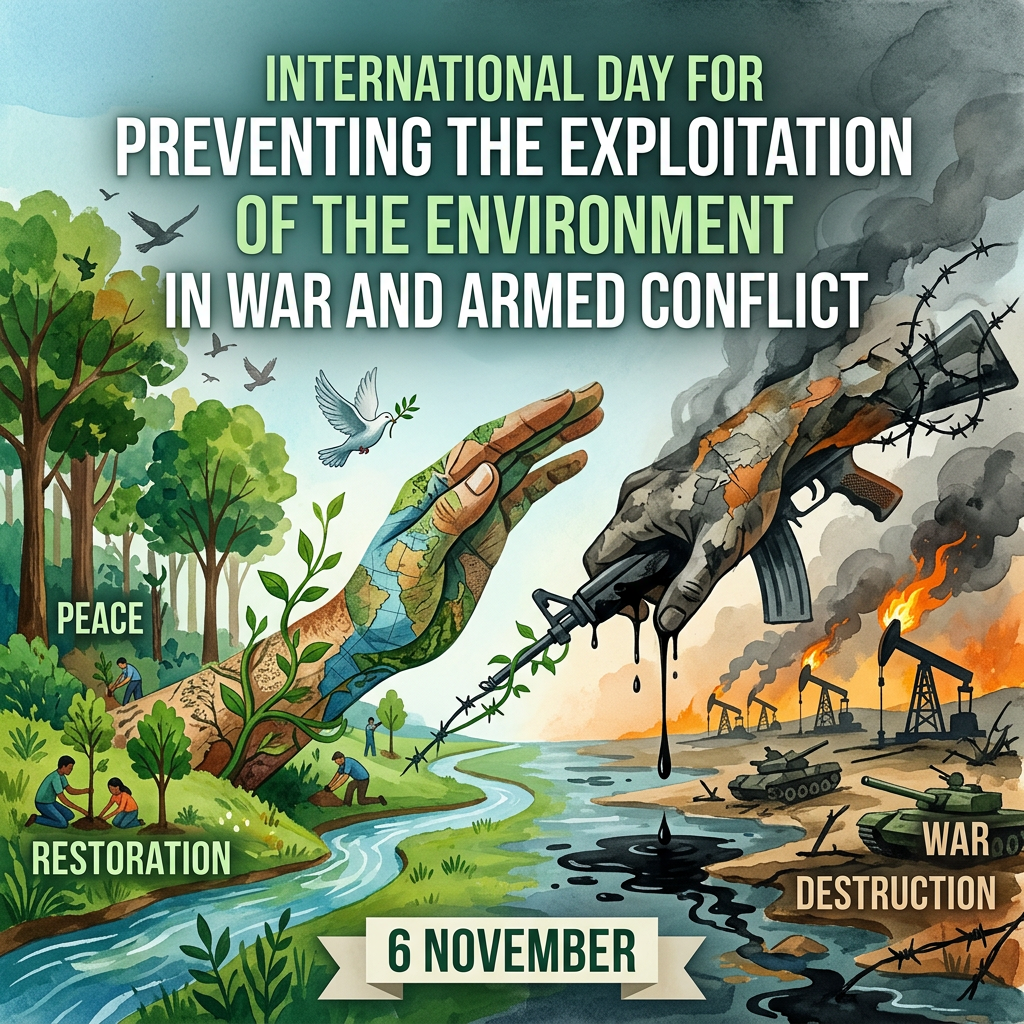
International Day for Preventing the Exploitation of the Environment in War and Armed Conflict
6 November
In war and armed conflict
There is more than human casualties
The environment and Urban structures
Can be counted as victims of war as well !
Most of the conflicts
Start because of natural ressources
Or strategic geo-positions
Land, water, oil
Precious metals
Are objects of keen interest
And many of them are destroyed
Without mercy!
This should stop.
It is a crime against our planet
And one of the main causes of destabilization
And political unrest
What Is a Tsunami?
A tsunami is a series of powerful ocean waves caused by the sudden displacement of a large amount of water. Unlike the familiar waves made by wind, tsunamis involve the movement of the water column from the seafloor to the surface. They can travel across entire ocean basins at speeds comparable to a jet aircraft, often passing unnoticed in deep water. Near shore, however, the seabed rises and the waves slow, bunch together, and grow much taller. That’s when the ocean’s quiet commute becomes a very serious arrival.
What Causes One?
Most tsunamis begin with a large undersea earthquake, especially where one tectonic plate slips beneath another. If the seafloor suddenly lifts or drops, it pushes the water above it outward, starting waves that spread in every direction. Earthquakes are the headline act, but they aren’t the only performers: underwater landslides, volcanic eruptions, and, very rarely, meteorite impacts can also shove enough water to create a tsunami.
Not every earthquake produces a tsunami. The quake generally needs to be strong, shallow, and capable of moving the seafloor vertically. A dramatic tremor that mostly shakes the ground sideways may cause little ocean displacement. The details beneath the waves matter more than the drama on the Richter scale.
Why the Shoreline Is at Risk
In deep water, a tsunami may be only a modest bump in the ocean’s surface, spread over a very long distance. As it enters shallow coastal waters, it slows and its energy is compressed, causing water levels to rise dramatically. It may arrive as a fast-rising flood rather than a neat, curling surf wave—so don’t expect a cinematic barrel to announce itself.
A tsunami usually arrives as multiple waves, and the first may not be the largest. The sea may also withdraw unusually far before an arrival, exposing the seabed like nature has pulled back the curtain. That’s a warning, not an invitation to collect shells. Move to higher ground and follow local alerts; minutes spent getting somewhere safe matter far more than a closer look.
Remember the Simple Rule
In short, a tsunami is a series of waves created when water is displaced suddenly, most often by an undersea earthquake. Know the natural warning signs, heed official instructions, and head inland or uphill. The ocean may be beautiful, but during a tsunami, admiration is best practiced from a safe distance.
Shop tips



Thank you for reading, shares and comments!
✨ Comment Policy ✨
We welcome thoughtful, kind, and constructive comments that contribute to meaningful conversations.
Please note:
- Promotional links and unsolicited offers will be removed.
- Spam, irrelevant content, or self-promotion without prior permission will not be published.
- We value quality engagement over quantity — thank you for helping us keep this a respectful and inspiring space!


