
Table of Contents
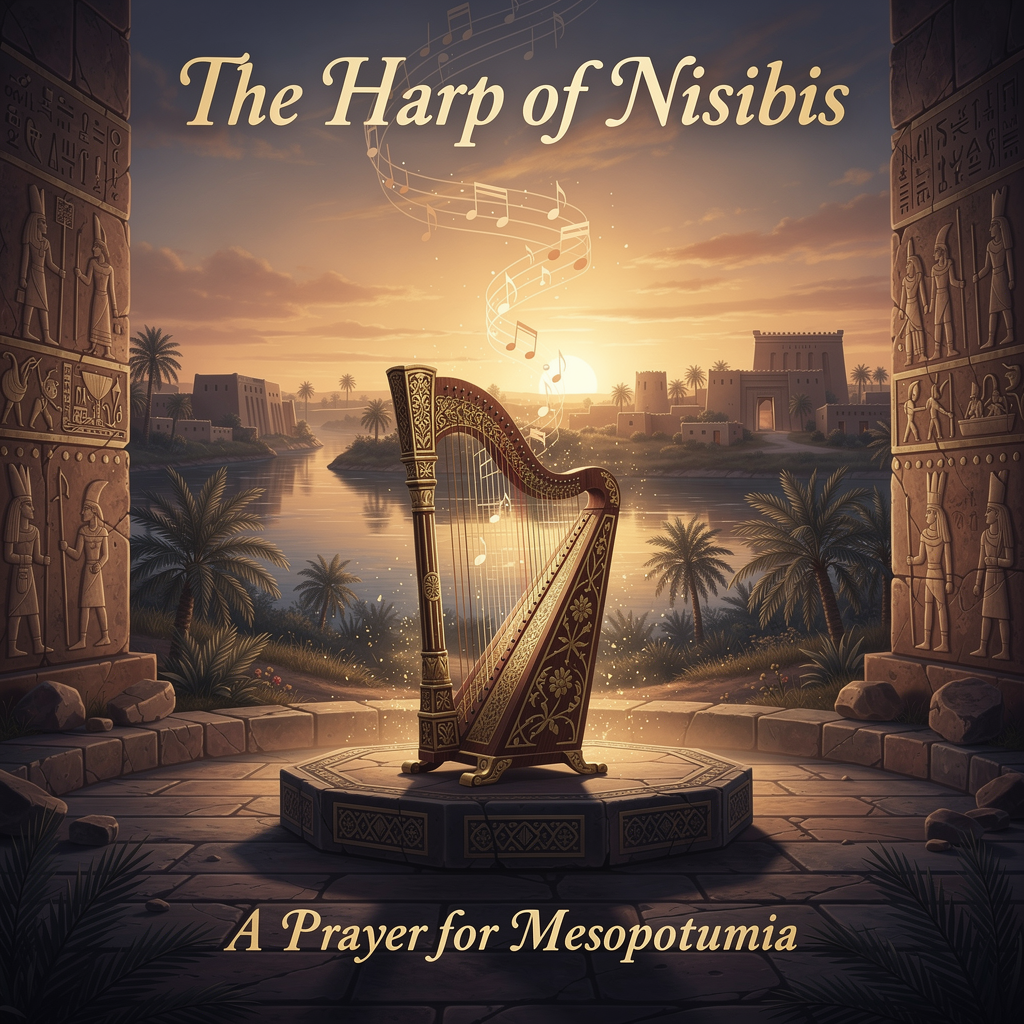
The Harp of Nisibis. A Prayer for Mesopotamia
A prayer in Ephrem’s spirit should be filled with symbols, paradoxes, light, fire, rivers, gardens, and the wonder of God’s humility. It should not merely explain doctrine but sing it.
This lyrical text serves as a modern prayer composed in the distinctive theological and poetic style of the fourth-century saint, Ephrem the Syrian. It utilizes rich metaphorical imagery, such as fire, jewels, and gardens, to illustrate the divine mysteries of the Incarnation and Christ’s restorative power. The author petitions for peace and healingacross the historic regions of Mesopotamia, specifically naming the ancient cities of Nisibis and Edessa. By weaving together themes of spiritual liberation and the return to a lost paradise, the passage seeks to transform human suffering into eternal glory. Ultimately, the work functions as a liturgical tribute that calls for the unification of all humanity through the restorative “medicine of life.”
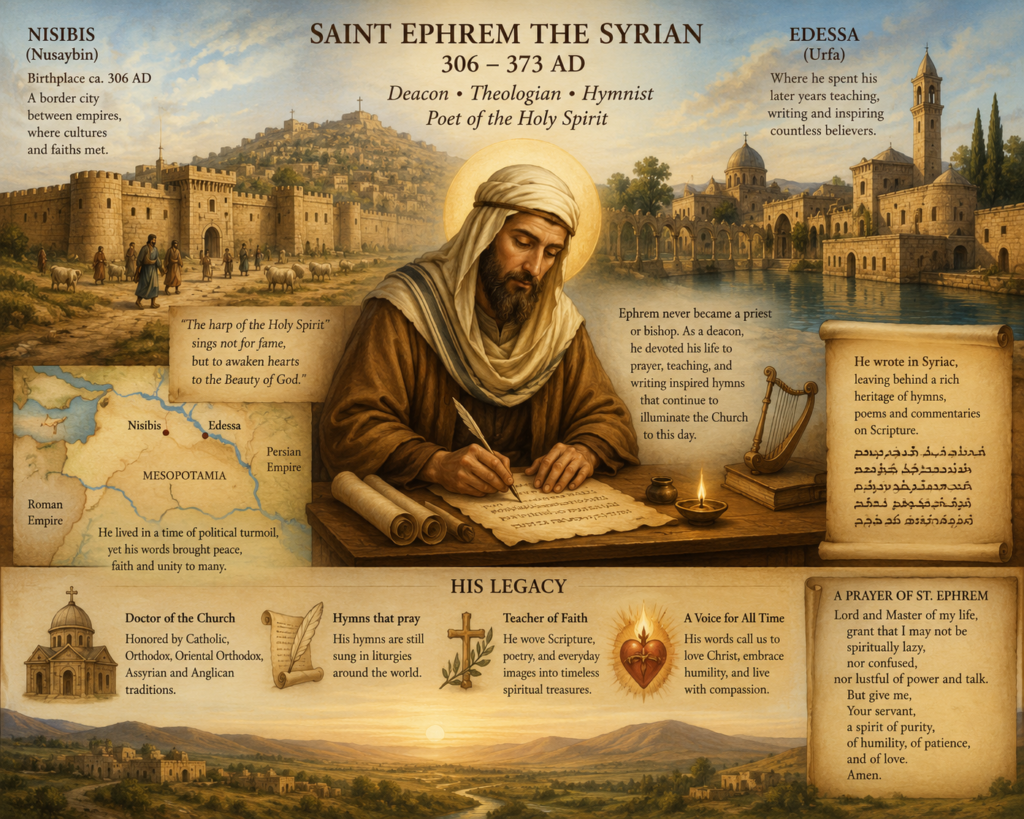
A prayer in Ephrem’s spirit
O Christ, Pearl beyond price,
hidden in the fields of earth,
yet shining through every land,
Look with mercy upon the peoples
of Nisibis and Edessa,
upon the valleys and rivers
where Your servant Ephrem sang Your praise.
The dust remembers his footsteps;
the stones remember his hymns;
the winds that cross Mesopotamia
still carry echoes of his harp.
Lord of Majesty,
who entered the narrow womb of the Virgin,
teach all hearts the mystery of Your Incarnation.
You are the Fire
who entered our clay and did not consume it.
You are the Sun
who clothed Himself in our humanity
without diminishing His splendor.
May the peoples of those ancient lands
know that Heaven has visited earth,
that the Infinite has become our Brother,
that the Eternal has entered time
to gather time into eternity.
O Medicine of Life,
heal the wounds of division,
the scars of war,
the memories of grief,
the hidden sorrows known only to You.
As a physician seeks the sick,
You descended to Adam’s exile.
As a shepherd seeks the lost,
You entered the wilderness of death.
May they behold Your salvation,
not as a distant teaching,
but as a river flowing through dry places,
making deserts bloom once more.
O Tree of Life,
planted upon the hill of Golgotha,
stretch Your branches across the nations.
Let those who hunger
taste Your fruit and live.
Let those who wander
find shade beneath Your mercy.
Let those who despair
hear the song of Your resurrection.
Redeemer of the world,
who entered the tomb
and filled its darkness with light,
Break every chain forged by hatred.
Loose every knot tied by fear.
Open every prison built by sin.
As You brought Adam from the grave,
draw Your children from every captivity,
visible and invisible.
And when the long journey is ended,
grant them not only forgiveness,
but glory.
Clothe them in the garment of light
that Adam lost and You restored.
Let them walk in the Paradise
which no sword now guards,
where every tear is transformed into a jewel,
where every wound becomes a testimony,
where every saint shines
with the beauty of Your face.
There may the peoples of Nisibis and Edessa,
and all the children of Abraham,
and all the nations under heaven,
gather around the Fountain of Life.
Then shall creation become one hymn,
and every tongue one harp,
and every heart one sanctuary.
To You, O Christ,
with the Father who sent You,
and the Holy Spirit who sings through Your saints,
be glory, wonder, and praise,
now and unto the ages of ages.
Amen.
One feature that is particularly Ephremic in this prayer is the movement from Incarnation → Salvation → Redemption → Glorification. Ephrem often saw these not as separate doctrines but as one continuous divine descent and ascent: God became what we are, so that humanity might share in what God gives. The “garment of light” and the restoration of Paradise are among his most beloved recurring images.
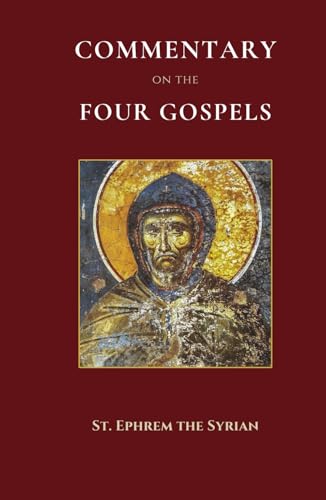
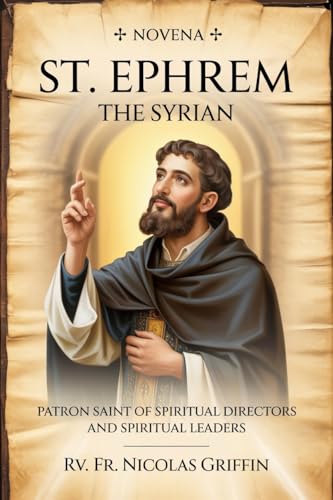
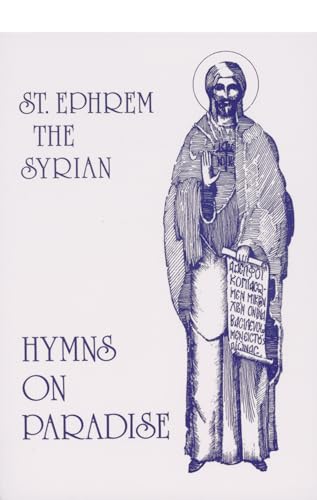
The Harp of Nisibis . Why Mesopotamia’s Greatest Theologian Sang
Thank you for shares… let us unite in prayer for peace!
Take time to learn
Invest in your future
Embark on a journey into the realm of affiliate marketing and craft your own website within a vibrant, supportive community. Join me in this adventure, where you can begin as a free starter and stay as long as you desire. Enjoy complimentary hosting and foundational teachings to set you on your path. For those with advanced skills, opportunities to elevate your expertise await. Take a moment to explore and witness the magic for yourself!