
Table of Contents
The Symbolism and Significance
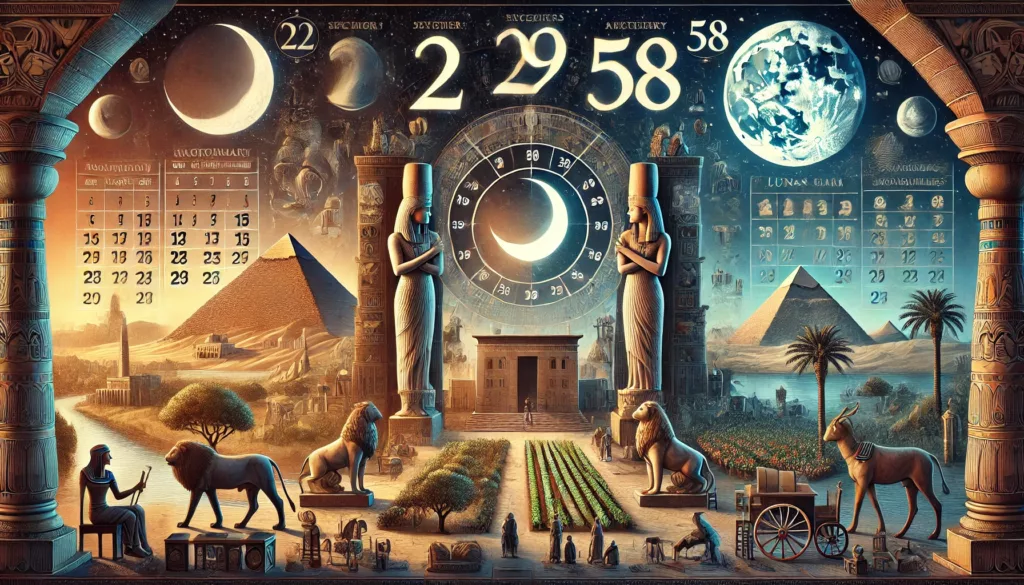
Numbers in ancient Egyptian culture were not merely tools for calculation but carried deep symbolic meanings and were intertwined with their cosmology, religion, and daily life. The numbers 58, 29, and 2 each held particular significance and can be explored to understand their broader cultural and symbolic context.
The Number 2 in Ancient Egypt
Duality and Harmony
- Ma’at:
- The concept of Ma’at, which represents truth, balance, and cosmic order, is central to understanding the significance of the number 2. Ma’at emphasized the duality and balance in the universe, reflecting the harmony between opposing forces.
- In practical terms, Ma’at influenced Egyptian law, governance, and daily practices, ensuring that actions aligned with cosmic order.
- Upper and Lower Egypt:
- The unification of Upper and Lower Egypt was a fundamental theme in Egyptian culture, symbolized by the dual crowns worn by the pharaohs (the White Crown of Upper Egypt and the Red Crown of Lower Egypt).
- This duality was often depicted in art and architecture, symbolizing the unity and balance of the nation under the pharaoh’s rule.
- Deities and Mythology:
- Egyptian mythology often featured pairs of deities representing complementary forces. Examples include Osiris and Isis (life and death, fertility and mourning) and Horus and Set (order and chaos).
- The dual nature of these deities reflected the Egyptian understanding of the world as a balance of opposing forces, essential for maintaining Ma’at.
Practical Applications
- Architecture and Art:
- Egyptian architecture emphasized symmetry and balance, often using pairs of statues, obelisks, and columns to create a sense of harmony.
- The layout of temples and monuments frequently incorporated dual elements, reflecting the dual nature of the cosmos.
- Calendar and Agriculture:
- The Egyptian agricultural calendar was divided into two main seasons: the growing season (Peret) and the harvest season (Shemu). This division was crucial for agricultural planning and sustaining their civilization.
- The duality of the seasons mirrored the broader cosmic balance that the Egyptians sought to maintain.
The Number 29 in Ancient Egypt
Lunar Significance
- Lunar Cycle:
- The number 29 is closely associated with the lunar cycle. A lunar month, or synodic month, is approximately 29.5 days long. The Egyptians, keen observers of the moon, used this cycle to organize their calendar and religious observances.
- The phases of the moon, divided into waxing and waning periods, were fundamental to their timekeeping and ritual practices.
- Religious Festivals:
- Many religious festivals and ceremonies were timed according to the lunar calendar. The number 29, representing a complete lunar month, was significant in determining the timing of these events.
- Key festivals, such as the Opet Festival, were closely linked to the lunar cycle, emphasizing the moon’s role in their religious life.
Symbolic and Practical Importance
- Night and Day:
- The dual phases of the moon (waxing and waning) corresponded to the balance of light and darkness, another reflection of Ma’at. The moon’s cycle symbolized the continuity of life and the natural order.
- Night and day, represented by the moon and sun, were seen as complementary forces that maintained cosmic balance.
- Agricultural Planning:
- The lunar calendar was used to plan agricultural activities. The number 29, marking a lunar month, helped farmers synchronize planting and harvesting with the natural rhythms of the environment.
- Observing the moon’s phases allowed for precise timing in agricultural practices, essential for ensuring successful crops.
The Number 58 in Ancient Egypt
Extended Lunar and Seasonal Cycles
- Bi-Monthly Periods:
- Doubling the number 29 gives 58, representing two lunar months. This period could be significant for tracking longer cycles in both agricultural and religious contexts.
- Two lunar months, or approximately 58 days, marked important transitions and phases in the agricultural calendar, such as the time between planting and the first signs of growth.
- Seasonal Alignment:
- The Egyptians aligned their activities with both the lunar and solar calendars. The number 58, as a bi-monthly period, helped bridge these two systems, ensuring that agricultural and religious events were properly timed.
- This alignment was crucial for maintaining harmony with the natural and divine order, reflecting the broader theme of balance in Egyptian culture.
Symbolic Implications
- Longer Cycles and Continuity:
- The number 58, representing two complete lunar cycles, symbolized continuity and the extended passage of time. It underscored the importance of observing and understanding longer natural cycles.
- This period could be seen as a reflection of the Egyptians’ deep connection to the rhythms of the cosmos and their desire to harmonize their activities with these cycles.
- Extended Ritual Periods:
- Some religious rituals and festivals might span multiple lunar months, making the number 58 relevant in planning and executing these extended ceremonies.
- These longer periods of observance reinforced the significance of sustained devotion and the cyclical nature of religious practices.
Conclusion
In ancient Egyptian culture, the numbers 2, 29, and 58 each held significant symbolic and practical meanings. The number 2 represented duality, balance, and harmony, central themes in Egyptian cosmology and daily life. The number 29 was closely tied to the lunar cycle, influencing their calendar, religious festivals, and agricultural planning. Doubling this to 58 extended these concepts to longer cycles, reflecting the Egyptians’ understanding of continuity and the natural order. Together, these numbers reveal the intricate interplay between mathematics, astronomy, religion, and agriculture in ancient Egypt, highlighting their profound connection to the rhythms of the cosmos and the divine order they sought to maintain.
Enjoy the readings! Thanks for shares and comments ?
Take time to learn
Invest in your future
Embark on a journey into the realm of affiliate marketing and craft your own website within a vibrant, supportive community. Join me in this adventure, where you can begin as a free starter and stay as long as you desire. Enjoy complimentary hosting and foundational teachings to set you on your path. For those with advanced skills, opportunities to elevate your expertise await. Take a moment to explore and witness the magic for yourself!