

Table of Contents
About Red Week
About “Red Week”, exploring its meaning, origin, global examples, and references:
🌍 What Is the Red Week? Meaning, Origins, Global Examples, and Historical References
Throughout history, the term “Red Week” (or its equivalents in other languages) has surfaced in various contexts: political uprisings, labor movements, religious observances, and commemorative acts. Though not always referring to the same event or ideology, the common thread tying these “Red Weeks” together is intensity, conflict, or fervent passion. Often social, political, religious or spiritual in nature.
This blog unpacks the meaning of “Red Week,” looks into several significant global instances where the term has been used, and reflects on why the idea of a “Red Week” continues to captivate people across time and culture.
🔴 What Does “Red Week” Mean?
The term “Red Week“ generally connotes a period of upheaval, resistance, or solemn remembrance, depending on the cultural and historical context. The color red has long symbolized blood, revolution, sacrifice, or power. Thus, when a week is deemed “Red,” it is usually a reference to:
- Violence or bloodshed (as in revolts or protests)
- Labor movements (red as the color of socialism and communism)
- Religious symbolism (red for the blood of martyrs or passion of Christ)
- National mourning or remembrance (red flags or lighting to honor fallen soldiers or martyrs)
🗺️ Notable Examples of “Red Week” Around the World
Here are some prominent historical and contemporary examples of what has been referred to as “Red Week” or similar terms globally:
🇮🇹 Red Week (Settimana Rossa). Italy, 1914
Perhaps the most historically famous “Red Week” occurred in Italy:
- Date: June 7–14, 1914
- Context: Socialists, republicans, and anarchists staged a general uprising in Italy, especially in the region of Romagna and the Marche, after the killing of three anti-militarist protesters by government forces.
- Events: Strikes, demonstrations, sabotage of railways, burning of churches and public buildings.
- Goal: Protest against Italy’s growing militarism and entry into World War I.
- Outcome: It ended in failure, but it was a foreshadowing of Italy’s internal divisions that would later fuel fascism.
Reference: Roland Sarti, Italy: A Reference Guide from the Renaissance to the Present
🇨🇱 Red Week. Chile, 1905
- Date: October 22–28, 1905
- Context: In Santiago, a protest over the high cost of living and meat tariffs escalated.
- Events: What began as a peaceful demonstration turned violent. Rioters looted and destroyed property.
- Death Toll: At least 200 people died.
- Legacy: Highlighted social inequality and political unrest in early 20th-century Chile.
Reference: Julio Pinto & Gabriel Salazar, Historia contemporánea de Chile
🇫🇷 Bloody Week (Semaine Sanglante). Paris Commune, France, 1871
Though not called “Red Week” per se, the Semaine Sanglante (Bloody Week) is conceptually similar:
- Date: May 21–28, 1871
- Context: The final week of the Paris Commune, a radical socialist government that ruled Paris for 2 months.
- Events: The French army recaptured Paris, leading to the massacre of thousands of Communards.
- Significance: A brutal repression of one of the earliest modern socialist revolutions.
Reference: Kristin Ross, Communal Luxury: The Political Imaginary of the Paris Commune
🇵🇭 Red-Tagged Weeks. Philippines
In the Philippines, the government has at times designated or associated weeks with “red-tagging”:
- Meaning: “Red-tagging” refers to labeling individuals or groups as communists or terrorist sympathizers.
- Context: Weeks of protest or remembrance (e.g., anniversary of Martial Law) often get “red-tagged,” leading to surveillance or repression.
- Symbolism: The color red is used both by activist groups (for revolution) and by the state (for threat alert).
Reference: Amnesty International Reports on the Philippines; Human Rights Watch
🟥 Red Weeks in Modern Contexts. Awareness and Commemoration
In recent years, “Red Week” has also been used to mark awareness campaigns or commemorative events:
🩸 1. Menstrual Health Awareness : “Red Week” in Schools or NGOs
- Used by: NGOs and health organizations.
- Goal: Normalize conversation about menstruation, break taboos, and distribute menstrual hygiene products.
- Countries: India, Kenya, UK, among others.
🕯️ 2. Religious Observance : Holy Week
- In Catholic tradition, the liturgical color red is used on Palm Sunday and Good Friday, symbolizing Christ’s passion and martyrdom.
- Though not called “Red Week,” this sacred time aligns with the idea of suffering, blood, and sacrifice.
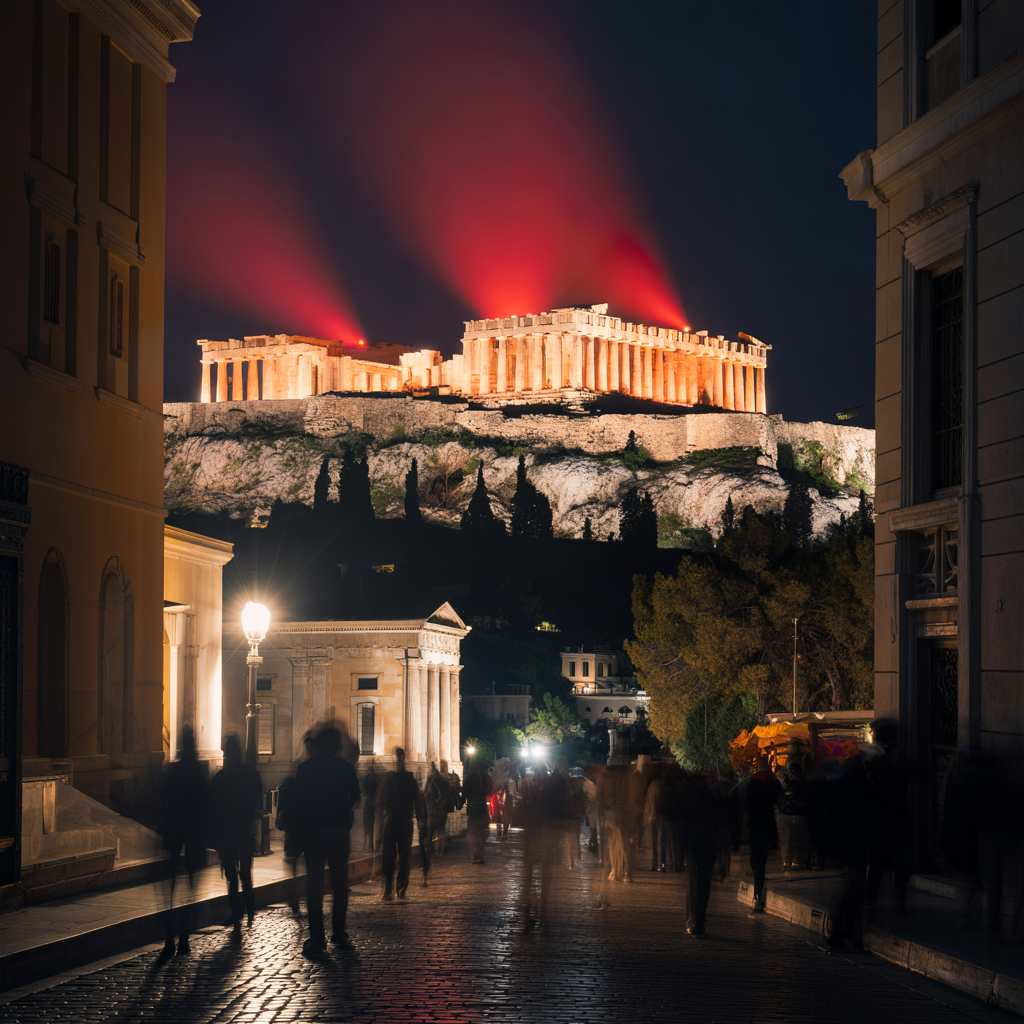
🕊️ 3. Remembrance Events : Red Light Week
- In some countries, buildings are lit in red light for a week to remember:
- Victims of terrorism (e.g., Belgium’s Red Light Memorial)
- Military sacrifices
- Martyrs in religious or political traditions
🤔 Why Does “Red Week” Matter?
The recurring use of “Red Week” across cultures and eras signals something deep in our collective human memory:
- Red evokes urgency, passion, and sacrifice.
- A week allows for sustained engagement, reflection, or unrest. Not just a moment, but a rhythm.
- Whether in protest, prayer, or remembrance, Red Week becomes a symbolic space to grieve, resist, or commemorate.
In spiritual terms, it can be seen as a kairos moment. A decisive, transformative time where individuals or societies face a call for change, justice, or awakening.
📚 References and Further Reading
- Roland Sarti, Italy: A Reference Guide from the Renaissance to the Present
- Kristin Ross, Communal Luxury: The Political Imaginary of the Paris Commune
- Julio Pinto & Gabriel Salazar, Historia contemporánea de Chile
- Amnesty International & Human Rights Watch reports on red-tagging in the Philippines
- Catholic Church liturgical norms – General Instruction of the Roman Missal
- United Nations & UNICEF Reports on Menstrual Health Campaigns
- News sources such as BBC, Al Jazeera, and La Repubblica on commemorations and protests.
- Church in need, alarming yearly report on persecuted Christians in the world
Red Week 2025: a global cry for religious freedom
🙏 Final Reflection
Whether it’s the cry of the oppressed, the blood of the faithful, or the memory of those who suffered, the idea of a “Red Week” asks us to pause and pay attention. It is a time for remembering what has been lost and for kindling the courage to stand up for what is just.
In your own context, have you witnessed or participated in a “Red Week”? Was it spiritual, political, or personal? What did it stir in you?
Let us not pass over these moments quickly, for often they contain the seeds of transformation.

Take time to learn
Invest in your future
Embark on a journey into the realm of affiliate marketing and craft your own website within a vibrant, supportive community. Join me in this adventure, where you can begin as a free starter and stay as long as you desire. Enjoy complimentary hosting and foundational teachings to set you on your path. For those with advanced skills, opportunities to elevate your expertise await. Take a moment to explore and witness the magic for yourself!