
Table of Contents
Brussels by Lantern-Light
Brussels by Lantern-Light. Saint Gudula, a Cathedral Jubilee, and the Quiet Work of Peace
(for Colors of My Soul — a peace blog)
There are places that don’t just stand in a city — they breathe with it.
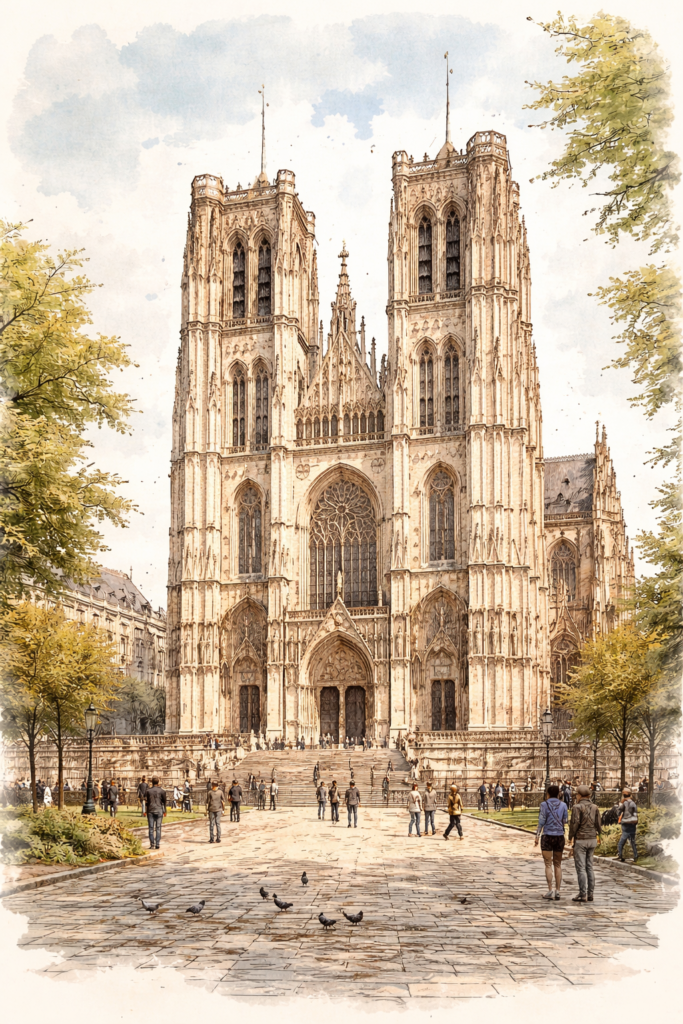
In Brussels, the Cathedral of St. Michael and St. Gudula is one of those places. From the outside, it’s a triumph of Gothic confidence: twin towers, pale stone, centuries of weather and witness. From the inside, it becomes something else entirely: a sanctuary of light, height, silence, and memory.
And in the Jubilee year (Gudula26) — celebrating 800 years since the cathedral’s foundation stone was laid — the cathedral invites the city (and every visitor) into a deeper kind of encounter: not only with architecture, but with meaning.
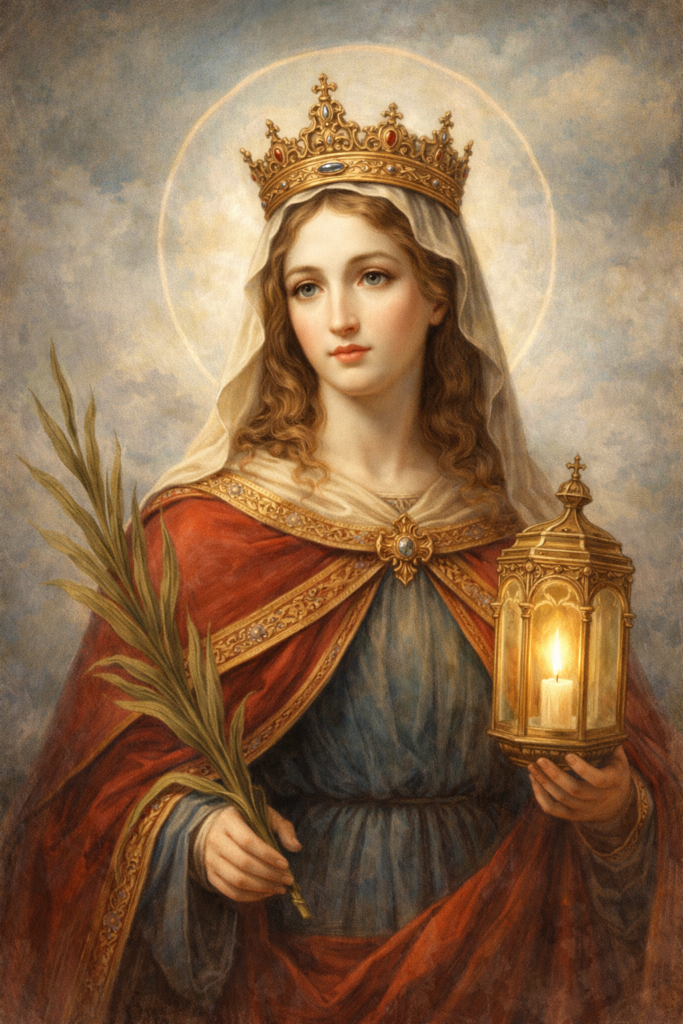
At the heart of that meaning is Saint Gudula — often pictured with a lantern in her hand.
A lantern is a simple object. But it’s also a small theology of peace.
The Saint of the Small Flame
Gudula lived long before the cathedral’s Gothic arches rose toward the sky — likely in the 7th–8th century, when the spiritual landscape of the Low Countries was still forming, and daily life was shaped by local customs, harsh seasons, and the slow work of community.
Tradition remembers Gudula not for conquest, not for spectacle, not for winning arguments — but for fidelity.
The most enduring story says she would wake in the early darkness to walk to church for prayer, carrying a lantern. A demon, the legend goes, repeatedly blew out her flame. Gudula simply relit it and continued.
You can take that as a medieval tale told to children — or you can take it as a human truth.
Because who among us hasn’t felt the wind?
The wind of fatigue.
The wind of discouragement.
The wind of division — political, cultural, personal.
The wind of living in a world that’s always louder than our inner life.
And still: relight the flame. Keep walking.
In a peace context, Gudula’s lantern becomes a symbol for nonviolent perseverance — not dramatic heroism, but the quiet refusal to let darkness have the last word.
Peace Is Not a Spotlight
Many people imagine peace as a grand state of arrival: a treaty signed, a conflict resolved, a perfect stillness.
But peace is often smaller than that. Peace is often:
- the decision not to escalate
- the choice to listen one minute longer
- the courage to apologize
- the discipline of truth spoken without contempt
- the patient rebuilding of trust
Peace is not always a spotlight. Sometimes peace is a lantern.
A lantern doesn’t erase the night. It gives enough light for the next step.
That’s Gudula’s gift: she doesn’t promise a world without darkness; she embodies the practice of walking faithfully through it.
A Cathedral as a Lesson in Light
The cathedral itself teaches something similar.
Gothic architecture is often described in terms of grandeur, but one of its deepest intentions is spiritual: to make room for light. Not just daylight, but symbolic light — a choreography of brightness and shadow that changes with time, weather, and season.
Inside the Cathedral of St. Michael and St. Gudula, peace can be felt in a physical way:
- the hush that settles your shoulders
- the height that lifts your gaze
- the stained glass that refuses to be reduced to a single color
- the way sound behaves, as if the air remembers songs
In a city as international and multilayered as Brussels — a city of institutions and languages, urgency and negotiation — the cathedral becomes a counter-space. A place that doesn’t argue. A place that simply holds.
And that holding is a form of peace.
What Gudula Means to Brussels
Saint Gudula is not only “a saint from the past.” She belongs to Brussels in the way that a river belongs to its banks — shaping, nourishing, quietly defining.
The cathedral bears two names: St. Michael, protector and guardian; and St. Gudula, the local saint whose story became a spiritual root for the place. Her presence is woven into Brussels’ identity: not as propaganda, but as memory. Not as dominance, but as belonging.
In this Jubilee year, Brussels is not merely celebrating a building’s age. It is celebrating the human yearning that built it: the longing for meaning, beauty, protection, and hope — the longing to keep a light burning through centuries of change.
The Jubilee Year as a Peace Invitation
Anniversaries can become nostalgia — “look how impressive the past was.”
But a Jubilee can also become something braver: a return to essentials.
Gudula26 is a chance to ask: what is this cathedral for today?
Yes, it is a treasure of heritage and art. Yes, it is a destination. Yes, it is part of the city’s cultural life. But it is also a place where people step inside carrying invisible loads: grief, uncertainty, prayer, gratitude, loneliness, longing.
In a peace blog, this matters: peace is not only a public project; it is also an inner practice that ripples outward. A cathedral can function like a “peace reservoir” — not solving the world, but replenishing the human heart that must live in it.
And Saint Gudula’s lantern becomes the Jubilee’s most fitting emblem: not fireworks, but faithfulness.
A Traveler’s Way of Entering (Gently)
If you visit Brussels during the Jubilee year, here’s a softer way to approach it — less like ticking off a landmark, more like receiving a place.
- Arrive with one intention, not ten photos.
Choose a simple inner sentence: “Let me be quiet for a moment.” - Let the stained glass teach you about difference.
Peace isn’t the absence of color; it’s color held together by light. - Find Gudula — the lantern figure — and pause.
Ask yourself: Where is my flame vulnerable right now? - If there’s music, stay.
Choral or organ music doesn’t just entertain in a cathedral; it reorganizes the nervous system. It reminds the body how to breathe. - Leave with one small act.
Light a candle, offer a prayer, write a note, forgive someone silently, decide not to feed an old conflict. Take the lantern home.
This is how tourism can become pilgrimage — even for people who don’t use religious words.
What Her Lantern Asks of Us
We live in an age of blown-out lamps.
Some are personal: burnout, anxiety, fractures in family, loneliness behind screens.
Some are collective: polarization, war, migration grief, the slow violence of poverty, the exhaustion of empathy.
Saint Gudula doesn’t offer a shortcut through any of this. She offers something simpler and harder:
Relight the lamp.
Again.
And again.
Peace work can feel like relighting: you do the humble thing, and the wind returns. You do it anyway. You refuse cynicism. You refuse to become what you resist.
There is a kind of sanctity in that refusal.
Closing with A Blessing for the Next Step
In the Cathedral of St. Michael and St. Gudula, the light is never the same twice. It changes with the hour, the weather, the season — and still, it is light.
That, too, is a peace lesson: peace is not a fixed mood. It is a practice. A turning toward the good. A steady hand around a fragile flame.
May Saint Gudula’s story — lantern in hand — remind us that peace does not require us to banish the night. Only to keep walking, with enough light for the next step.
And perhaps that is what the cathedral means, most deeply, in this Jubilee year:
a place where the soul remembers its color,
and the city remembers its light.
Relight the lamp. Again and again.
Take time to learn
Invest in your future
Embark on a journey into the realm of affiliate marketing and craft your own website within a vibrant, supportive community. Join me in this adventure, where you can begin as a free starter and stay as long as you desire. Enjoy complimentary hosting and foundational teachings to set you on your path. For those with advanced skills, opportunities to elevate your expertise await. Take a moment to explore and witness the magic for yourself!